 |
| Power Bank Market : $17 Billion By 2020 |
Although device manufacturers are reporting that the explosive growth
in demand for many electronic gadgets, such as smartphones and tablets,
is dropping, it is important to point out that people are still buying
more and more electronic devices.
Our devices are changing, acquiring
more and more powerful hardware including faster processors and higher
resolution screens. For many users, modern smartphones can provide a day
of typical use but for some of us, smartphone (especially) and tablet
battery life is not enough for a busy day.
As more and more
manufacturers are designed devices with integrated, built-in batteries
that cannot be replaced, so there are fewer models available where one
can easily swap
a discharged battery and replace a fully charged battery.
However, this
involves ensuring the user has at least one spare battery fully charged
and good to go. One alternative to this is to plug the device into a
mains power socket, but for many of us this is not a practical solution.
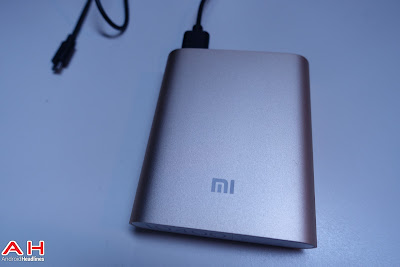
Instead, there is something else you can use: a portable
battery-powered recharger – also known as a
Power Bank.
Power banks are essentially a rechargeable battery typically designed
with one or more USB ports and a battery status LED, and may be used to
top-up or recharge another device. They contain their own battery, often
recharged via a standard MicroUSB port – almost always a lithium ion or
lithium polymer battery, which is similar technology to that of a
smartphone battery.
It is a rapidly expanding market, fueled by a
combination of continued growth in smart devices and the changes of
design in these products. The overall power bank market is expected to
reach $17.8 billion by 2020, showing a company rate of growth of over
23% between now and then, but there are different sizes of power bank
and these are expected to grow at slightly different rates.
Currently,
the 9,500 mAh to 12,499 mAh power bank products have the highest market
share but the source expects that the higher capacity power banks (
แบตเตอรี่สำรอง), those
of 12,500 mAh and greater, to experience higher growth going forwards.
This is because of the trend of smartphone batteries increasing along
with refinements in technology and larger screens: smartphones are using
more power during a day and have correspondingly larger batteries,
which require a higher capacity power bank.
The source details a report that goes into considerable detail including
the battery capacity, the type of power (as in addition to conventional
rechargeable batteries, there are also solar powered, chemically
powered and gas powered, such as hydrogen), the number of USB ports that
the unit provides and the region where they are sold. Currently, the
Asia-Pacific region accounts for almost half of all power banks sold and
it’s expected to remain as the most prominent buyer of the portable
charger technology.
Cr.
Android Headline ,
bangkok21st
,
e-news


