 |
| Blood pressure : Doctor number ?? |
Almost half a century after rigorous studies showed medicines that
lower blood pressure prevent heart attacks, strokes and deaths,
researchers still do not know just how low blood pressure should go.
Millions of people take these drugs, but this fundamental question
remains unresolved.
“We all know treating hypertension is good,
but we don’t know how aggressive we should be,” said Dr Michael Lauer,
director of the Division of Cardiovascular Sciences at the National
Heart, Lung and Blood Institute in Maryland, United States.
The
institute is seeking definitive answers as part of its mission to drive
down deaths from cardiovascular disease, continuing the decades-long
plunge in mortality rates from this leading killer.
The results of
a large and rigorous study, called Sprint for Systolic Blood Pressure
Intervention Trial, are expected in 2017. Researchers are following
9,000 middle-age and older adults with high blood pressure. Half were
randomly assigned to get their systolic pressure — the top number that
measures pressure from
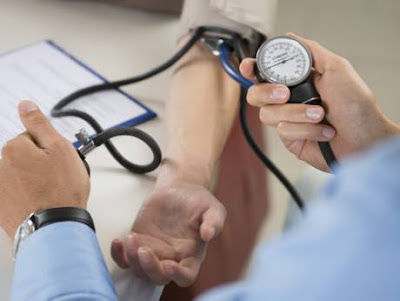
Blood Pressure Monitor
when the heart contracts — to below 120 while the
others were to get to below 140.
The study will measure not just heart
attacks, strokes and kidney disease, but also effects on the brain. Do
people think better and avoid dementia with lower pressure?
In the meantime, doctors are making decisions in a fog of uncertainty.
What
about a patient such as Glenn Lorenzen, 67, whose systolic pressure was
a frightening 220 in October?
On a chilly day in December at the
cardiovascular clinic at the Boston Veterans Affairs hospital, he had
received the good news that drugs and weight loss had lowered his
reading to 124. Should he be happy? Should he aim to be below 120? Or
should he ease up on the medications a bit and let his pressure drift
toward 140 or even 150?
One school of thought says blood pressure
rises with age to push more blood into the brain. Another says high
blood pressure damages the brain, perhaps causing silent ministrokes.
“We
don’t know which is right,” said David Reboussin, a biostatistician at
Wake Forest University who is a principal investigator for the new
federal study.
The trend in geriatrics is to let pressure drift
up, although not above 150, said Dr Alfred Cheung, a study investigator
who is a nephrologist and professor of medicine at the University of
Utah.
“It’s not based on hard data,” he said.
The lack of evidence is at the heart of a dispute that is partly an artefact of the way thinking on blood pressure evolved.
When
drugs to lower blood pressure came on the market in the 1950s, many
doctors did not know if they should prescribe them. They thought
systolic pressure should be 100 plus a person’s age. The conventional
wisdom was that blood vessels stiffen with age, so higher pressure
helped push blood through them.
That view was discredited in 1967
when a rigorous study comparing the drugs with a placebo ended early
because those taking the medicines had so many fewer strokes and heart
attacks. The drugs became mainstays in medicine, credited with saving
millions of lives.
Many early clinical trials did not even address
systolic pressure, the focus today. Instead, they looked at diastolic
pressure, the lower number, representing pressure on blood vessels when
the heart relaxes between beats.
“The general thinking —
incorrectly — was that as you get older, the systolic naturally goes up”
to supply the brain with blood, said Dr William C. Cushman, the chief
of preventive medicine at the VA Medical Center in Memphis, Tennessee.
It
was only in 1991 that the first study on systolic pressure was
published. It and subsequent research concluded that the treatment goal
should be a level below 150 in order to prevent heart attacks, heart
failure and strokes. Almost no studies examined the outcomes at lower
goals.
So doctors and guideline makers have a conundrum, Cushman
said. “The epidemiology is consistent that having a systolic pressure of
120 or even below 120 is associated with reduced cardiovascular
mortality. But that doesn’t necessarily mean that treating with
medications to reach that level will give you that benefit.” The concern
is that drugs always have more effects than the one they are being used
for. So a blood pressure lowered with drugs is not necessarily the same
as one that is naturally lower.
Guidelines from experts are all
over the map. A panel appointed by the National Heart, Lung and Blood
Institute suggests a systolic pressure below 150 for those older than
60. The American Heart Association and other groups say it should be
under 140.
And it’s not just the question of the right goal for
systolic pressure. Blood pressure and cholesterol levels are now treated
very differently. Cholesterol guidelines take into account a patient’s
overall risk of a heart attack. But with blood pressure, at least for US
guidelines, the only thing that matters is blood pressure levels and
not other factors like family history or cholesterol levels.
That
was how the studies were designed, though, Cushman said. Cholesterol
trials took other risks into account. Blood pressure trials looked at
only blood pressure. But clearly some people are at lower risk than
others even though they have the same blood pressure. Yet all are
treated the same. Should that change?
That sort of inconsistency
leaves many physicians in a quandary. Lorenzen’s doctor at the Boston
VA, Dr J. Michael Gaziano, a Harvard professor of medicine, considers a
patient’s overall risk and is an evangelist for losing weight and
exercising to boost the effects of blood pressure drugs. He lives that
way himself, following a Mediterranean diet low on meat and engaging in
running, kayaking and cross-country skiing.
“You’re the thinnest person I know,” Lorenzen told Gaziano on the recent visit.
Lorenzen,
who has had two heart attacks, is still heavy, but he is one of
Gaziano’s star pupils. He has lost 27 kilograms and exercises most days.
When his pressure used to be 200 and above, he said he felt glum and
his head hurt “like a wicked sunburn. ” Although high blood pressure is
often called the silent killer, when pressures go very high, people may
feel effects from increased pressure in the brain, Gaziano said.
“Your
blood pressure is headed in a good direction, better than I would have
expected,” Gaziano told him. “The medicine alone wouldn’t do it. I have a
feeling your exercise and weight reduction have played a significant
role.”
“I get an A,” Lorenzen said proudly.
Hospitals and
medical practices evaluate doctors by how well patients’ pressures
adhere to guidelines and often penalize them financially when patients
are not adherent, so Gaziano would get very high marks for Lorenzen with
a blood pressure level of 124. The VA wanted systolic pressure below
140.
But Gaziano said the grading system that targets a single
value as a measure of success is flawed. “If a patient starts with a
pressure of 180 and gets it down to 145, I get a bad mark. I did not
succeed. But if a patient goes from 140 to 139, I succeeded.”
Another
patient at the clinic that day, Joseph Moscillo, 65, of Medford,
Massachusetts, was a case in point. He had had a heart attack, but he
had reduced his pressure to 150 from 200. He would not have been seen as
a success story. But Gaziano said he believed that rather than adding
more drugs to lower his pressure, it was more important for Moscillo to
trim down from 102 kilograms.
“We can keep piling on meds, but it is a losing game if you don’t exercise and control your weight,” Gaziano told Moscillo.
The
results of the Sprint study may affect doctors’ daily decisions. If it
finds that a pressure of below 120 is better than below 140, then the
plans for Lorenzen and Moscillo would probably change.
“If Sprint shows that below 120 is clearly better, that will change the whole landscape,” Cushman said.
But if the study finds that below 120 is no better than below 140, “we are left where we are now,” he added.
A third possibility is that a pressure of below 120 is actually harmful.
Few expect that but, Cushman cautioned, “You never know what you will find in a study until you open the envelope.”
–New York Times News service Begging to differ
European
guidelines call for a systolic pressure less than 150 except for older
adults, but they also take into account a person’s risk of heart disease
when deciding how low that number should go. And epidemiological
studies that follow large groups of people over time have found that
people whose systolic pressure is naturally 120 or lower have the lowest
risk of heart attacks and strokes.
The guidelines from the Heart,
Lung and Blood Institute panel constituted one of the most ambitious
efforts to build a consensus for blood pressure levels. The mission was
to use data from rigorous studies rather than expert opinion, the older
standard.
Previous guidelines by a similar committee convened by
the National Institutes of Health had set a goal of systolic pressure
below 140. The new guideline called for a pressure below 150 for people
age 60 and older. “That is where the benefit was seen,” in clinical
trials, said Dr Suzanne Oparil, director of the vascular biology and
hypertension program at the University of Alabama in Birmingham and
chairwoman of that committee.
But when the committee’s report was
published in December 2013, it immediately came under fire and five out
of the 12 committee members published their own report, advocating blood
pressure below 140.
“A minority group on the guidelines panel
felt it was insane to raise the target to 150 in the segment of the
population at highest risk from hypertension,” said Dr Jackson T. Wright
Jr. of Case Western Reserve University, who was among the dissenters.
Researchers are still undecided over how low should it be, which has an
impact on the aggressiveness of the treatment of hypertension.
Cr.
Gulf News ,
e-news
,
bangkok21st


